

How BOM & Tech Pack Tools Accelerate Fashion Production in 2026
Fashion teams don’t lose time because they lack ideas. They lose time because critical product decisions live in five places at once: a sketch file on someone’s laptop, a spreadsheet that’s “nearly final”, an email thread with the factory, a PDF tech pack that’s already out of date, and a WhatsApp message about a trim substitution.
In 2026, production calendars are tighter and more fragmented. Drops are smaller, replenishment cycles are shorter, and brands are under pressure to prove what products are made from – not just that they look good. That’s why modern brands are investing in digital Bill of Materials (BOM) and tech pack tools – they turn product development into a repeatable workflow, not a scramble.

BOMs and tech packs: the real handover between creative and production
A strong BOM is not only a list of components. It’s a live commercial and operational snapshot of a style, tied to:
- Costing reality (what your garment costs today, based on this fabric, this trim, this supplier, and this MOQ (minimum order quantity))
- Sourcing decisions (approved suppliers, alternates, lead times, incoterms, and minimums)
- Product consistency (colourways, component codes, and repeatable specifications across seasons)
- Compliance and labelling (composition, care, fibre claims, and packaging details)
That includes graded measurements, construction notes, stitch types, artwork placement, label positioning, packaging requirements, and fit comments – plus the “why” behind certain choices (for instance, why a seam must be topstitched for durability, or why a pocket bag must be switched to reduce bulk).
The 2025 efficiency pressures that carried straight into 2026
A few shifts in 2025 pushed production efficiency from “nice to have” to non-negotiable.
1) Sourcing is more distributed. Many brands have diversified their footprint, mixing regions to balance risk, lead times, and capacity. That increases the number of stakeholders who need clean, consistent specs.
2) Compliance and traceability expectations are rising. The direction of travel is clear: more product-level data, more transparency, and more proof. Even if you’re not selling into every regulated market today, you’ll feel the knock-on effect through suppliers, retailers, and platform requirements.
3) Smaller drops mean more styles moving through the pipeline. You might be producing fewer units per style, but you’re often managing more SKUs overall. That amplifies the cost of rework.
4) Teams are more cross-functional and more remote. Product development rarely happens in one office. You need a workflow that survives handovers across time zones.
In that environment, a “static document” approach starts to crack.
Why Illustrator, PDFs, and “doing it by hand” slow brands down
Adobe Illustrator is a powerful tool for sketching and artwork, but many brands end up using it (or exported PDFs) as the system of record for product development. That’s where problems creep in:
- Training and consistency: Illustrator-based workflows can depend heavily on individual skill. Two designers can document the same garment differently.
- Version control: A PDF tech pack is frozen in time. If a trim changes after the file is sent, teams can’t always tell what’s current.
- Hidden decision-making: Fit and construction decisions end up buried in email threads, not attached to the product record.
- Manual errors: Copy/paste measurement tables, duplicated line items, and mismatched component codes are common when teams build tech packs by hand.
Dedicated tech pack builders are a sound alternative because the tools are designed around the information, not around the drawing program.
For brands that want a more structured approach to sampling and supplier-ready documentation, Zedonk’s sampling & tech pack solution (Z Studio) helps teams build, manage, and share tech packs and product data in one place.
What matters more is that your BOM and tech pack data stays accurate, structured, and easy to share.

How centralised digital tools reduce errors and delays
When a brand moves BOM and tech pack creation into a centralised system, the biggest gains aren’t “flashy”. They’re practical, repeatable improvements that remove friction from everyday work.
One product record, fewer misunderstandings
A central system keeps every style’s specs, components, measurements, and notes in one place. Instead of chasing attachments, your team works from a shared record.
That makes a difference when a supplier requests a quick clarification, a fabric is swapped due to availability, a colour is added late in the process, or a measurement is adjusted after a fit session.
Clear change tracking
A single change (like a zipper length or a seam allowance) can ripple into sampling, consumption, costing, and production. Digital tools help by showing what changed, when it changed, and who approved it.
Faster supplier collaboration
Factories and vendors move faster when specs are unambiguous. Centralised tools reduce back-and-forth because suppliers can see the latest measurements and construction notes, updated BOM line items and approved alternates, plus comments and clarifications in context.
Instead of starting from “which file is correct?”, conversations start from “how do we execute this efficiently?”
Workflow improvements across design, sourcing, and suppliers
Here’s what an efficient, modern workflow can look like when your BOM and tech pack tools are properly connected.
1) Design-to-development handover that doesn’t drop details
Design can sketch and attach reference imagery, then product development builds the spec in a structured way: sizes, measurement points, tolerances, and construction.
2) BOM built alongside the spec, not after it
When the BOM is created early (and refined as the style evolves), sourcing can validate availability, lead times, and minimums before sampling drifts too far.
3) Sampling runs on documented decisions
Fit comments and adjustments are captured directly against the style. That means a supplier can work through changes without relying on a separate email summary.
4) Production readiness is easier to confirm
As you approach bulk, you can quickly sanity-check whether the style is “production ready”: BOM signed off, measurements final, packaging confirmed, artwork locked.
The outcome is a pipeline that keeps moving even when timelines shift.

A practical tech pack example your suppliers can actually use
If you’re looking for a simple tech pack example, it helps to think in terms of what a factory needs to make the garment correctly the first time.
A usable fashion tech pack example typically includes:
- Style overview: style name/code, season, size range, intended fit, and target fabric weight
- Technical drawings: front/back flats, plus callouts for key details (pockets, plackets, trims)
- Construction notes: seam types, stitch types, seam allowance expectations, reinforcements
- Measurement spec: POM table with base size, grade rules (if applicable), and tolerances
- BOM summary: fabric, lining, trims, labels, packaging, and approved alternates
- Artwork placement: positions, dimensions, and colour references
- Label and packaging instructions: care label placement, swing ticket, polybag warning, carton marking
- Revision log: what changed since the last sample and what’s now approved
When teams collect tech pack examples from different brands or seasons, you’ll often notice the same pattern: the best ones reduce interpretation. They answer supplier questions before the supplier has to ask.
What tech adoption really gives brands
BOM and tech pack tools won’t replace expertise, but they will protect it. They make your team’s decisions reusable, searchable, and consistent.
The benefits tend to show up as:
- Shorter development cycles because fewer steps need rework
- More accurate costing earlier in the process
- Fewer sampling rounds because suppliers receive clearer instructions
- Smoother supplier relationships because communication is less reactive
- Stronger operational resilience because information isn’t trapped with one person
For growing brands, there’s also a quiet benefit: onboarding becomes easier. New hires can understand how your product development works by looking at how your styles are documented.
How Zedonk can help
For fashion wholesale brands, the goal isn’t to “digitise everything” for the sake of it. It’s to keep product development moving – without compromising quality, margin, or supplier trust.
That’s exactly where BOM and tech pack tools earn their place. If you want to see how this could work in practice, take a look at Zedonk’s sampling & tech pack solution (Z Studio), or book a demo with us, no strings attached.
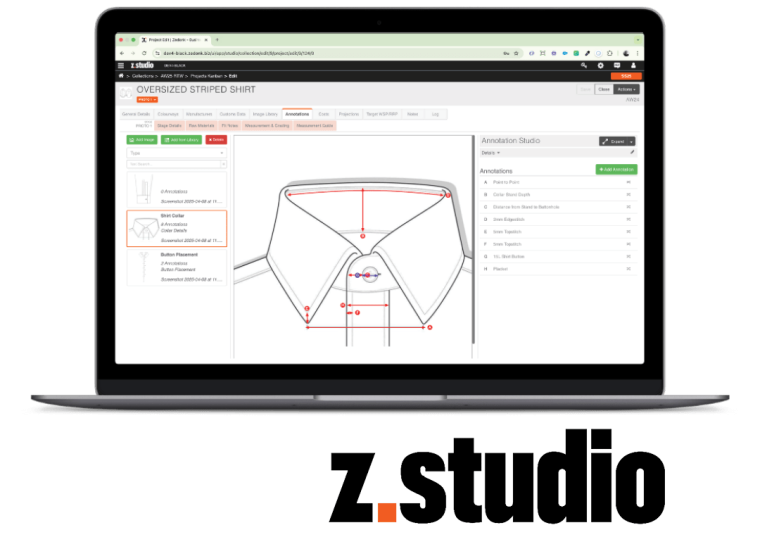 A New Sampling & Tech Pack Solution from Zedonk.