

ERP Automation Explained: How ERP Systems Streamline Business Processes
Automation can sound like a shiny promise. In fashion, it is usually more straightforward: fewer copy and paste jobs, fewer spreadsheet surprises, and fewer orders going out wrong because someone had to retype details late in the day.
As legislation increases and margins stay tight, brands need processes they can rely on. Product data is also heavier than ever, from fibre composition and country of origin to care instructions, labelling rules, and customer-specific requirements. When that is handled manually, it is not just slow, it is risky.
That is where ERP automation fits in: a practical way to make everyday work faster, cleaner, and more consistent across teams.

What is ERP automation?
So, what is ERP automation in real terms?
It is the system carrying work forward based on rules you set, instead of people moving information from one place to another. In a clothing and apparel business, that usually means:
- Data entered once, then reused everywhere it is needed
- Steps that trigger automatically when something changes, for example when an order is confirmed and stock is allocated
- Documents and notifications are generated without someone rebuilding them each time
In the fashion industry, ERP solutions are especially integral for brands wanting to demonstrate the transparency and sustainability of their business.
Why manual processes break down as you grow
Manual processes can work when volumes are low. As you grow, sales channels multiply, the SKU list lives in multiple places, orders arrive in different formats, stock moves too quickly to track, and production updates get buried.
Even careful teams end up with gaps, and gaps create rework. A dependable ERP workflow links your core activities, so the next step happens on time and in the right place.
ERP workflows that replace repetitive data entry
A strong ERP workflow is designed around what your team actually does, not what a software demo claims you could do. Here are a few workflows that typically remove the most repetitive work in fashion operations.
Order processing that runs without constant chasing
Order processing is where manual work creeps in quickly, especially when you have multiple customer groups, different delivery windows, and exceptions that need to be tracked. This is exactly what Sales Order Management is built for, keeping customer terms, pricing rules, and order status in one place.
With ERP automation, once an order is entered or imported:
- Product and pricing rules can be applied consistently
- Credit checks or approvals can trigger when needed
- Stock can be allocated based on availability and priority
- Delivery dates can be updated based on capacity
Instead of jumping between emails, spreadsheets, and shared drives, the team follows one flow, with fewer handoffs and fewer chances to miss something. For teams selling in person or at trade shows, the B2B Sales App captures orders on the spot and syncs them back into Sales Order Management, and the B2B Digital Showroom gives buyers a way to browse and place orders online, using the same underlying product and pricing data.
Inventory updates that stay accurate in real time
Inventory is often where manual processes fail first. A mismatch between what is available and what is promised can trigger missed deliveries, rushed fixes, and unhappy customers.
ERP automation keeps stock levels, allocations, transfers, and expected receipts connected, which sits at the heart of Production & Inventory in Zedonk. Goods in updates availability, transfers update both locations, allocations adjust when orders change, and low stock alerts flag issues earlier. If you hold stock across sites, Multi Location Inventory helps keep availability consistent, and Allocation & Fulfilment supports clearer allocation against open orders so you are not promising what is no longer there. The result is less debate about the numbers and quicker decisions.
Production planning that reflects what is actually happening
Production rarely runs in a straight line. Materials arrive late, trims change, and priorities shift. Automation will not remove complexity, but it can keep plans realistic.
A streamlined setup can generate work orders from confirmed demand, link material availability to readiness, flag bottlenecks based on lead times and capacity, and update completion dates when critical inputs change. In Zedonk, this planning layer sits within Production & Inventory, and it connects naturally to procurement through Raw Materials & Purchasing, so that purchase requirements and supplier orders are driven by what you actually need. Status updates can flow to sales and customer service, so customers get clearer answers.
Product data that stays consistent across every touchpoint
Product data keeps growing: compliance details, technical specs, marketing copy, barcodes, labelling, and imagery. If it sits in separate systems, teams duplicate work and make judgment calls they should not have to.
ERP automation supports one source of product information, with controlled updates and approvals. That is the role of Products & Costings, where style data, components, and costs stay connected, so teams are not rebuilding information in separate trackers. Changes are tracked, and documents like spec sheets and labels can be generated from the same data. If you need deeper development workflows, PLM Z.Studio software can run on its own or alongside Zedonk, helping teams manage sampling, tech packs, and product development without losing control of versions. This helps you avoid the same garment being described differently depending on who last touched the file.

How do ERP systems streamline business processes?
Teams often ask how ERP systems streamline business processes without making everything feel rigid.
A good ERP standardises what should be consistent, like data rules, approvals, and document formats, and it gives visibility where judgment is needed, like exceptions, shortages, and shifting priorities. In practice, that is why Zedonk is modular, you can cover the full cycle or start with the areas causing the most friction, then expand as the business grows. Instead of personal trackers, work moves through shared stages with clearer ownership and fewer gaps.
What improves when ERP automation is done properly
When ERP automation is built around real workflows, the benefits are practical and measurable.
Accuracy that protects the margin
Small errors now cost more. With tighter budgets and more complexity in each product, mistakes can mean shipping the wrong configuration, reworking labels, missing delivery windows, or overproducing.
Automation reduces rekeying and copy work, and it adds checks that catch issues earlier. When your product and margin data are consistent in Products & Costings, and your orders are managed in Sales Order Management, there is less opportunity for mismatched pricing, incorrect line items, or last-minute document fixes.
Visibility that helps teams work together
Most operational friction comes from teams not seeing the same information at the same time.
With a shared ERP workflow, sales, operations, and production can see what is confirmed, allocated, in progress, and at risk. This is where Allocation & Fulfilment and Production & Inventory work together, so availability, allocations, and delivery progress are not hidden in separate systems. That reduces back and forth and helps you respond to customers with confidence.
Coordination that scales without constant hiring
Growth often exposes process debt. Manual effort multiplies, and it starts to feel like you need more people just to keep up.
ERP automation supports more sustainable scaling by handling repeatable admin and surfacing the exceptions that need attention. Tools like the B2B Digital Showroom and B2B Sales App also reduce back office clean up by capturing cleaner orders earlier, then syncing them straight into the core system.
A quick way to spot the best automation opportunities
To find quick wins, look for places where the same data is entered more than once, spreadsheets bridge gaps, approvals sit in email chains, or everyone keeps asking for status updates because there is no shared view.
Streamlined processes are the foundation of scalable fashion operations
The goal is not to automate everything. It is to build dependable processes that keep pace with fashion, reduce avoidable errors, and protect margin.
When ERP automation is set up well, it supports how your business runs. It replaces repeat work with consistent flows, improves accuracy, and gives teams the visibility to make decisions quickly, even as compliance requirements rise and costs get less forgiving.
To find out more about how ERP automation can help your brand or book a demo, we’re just a few clicks or a call away, and we’d love to help.
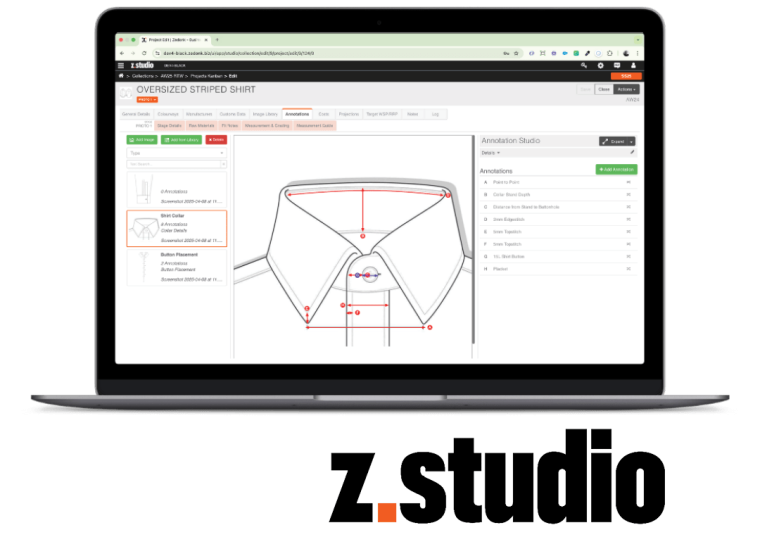 A New Sampling & Tech Pack Solution from Zedonk.