

How to Calculate Gross Profit Margin in Fashion
What is gross profit margin?
If you run a fashion brand or showroom, you already live by numbers: cost prices, landed costs, wholesale prices, discounts, and delivery windows. Gross profit margin (GPM) tells you what percentage of your sales you keep after paying for the goods you sell. In other words, it shows how much money is left to cover salaries, marketing, rent, and profit once your cost of goods sold (COGS) is accounted for. A strong margin gives you room to invest in better fabrics, reliable factories, and growth. A weak margin leaves you exposed to returns, chargebacks, or currency swings.
In wholesale fashion, margins can tighten quickly – especially when fabric prices rise mid‑season or freight surcharges creep in. That’s why understanding what gross profit margin means and having a reliable way to measure it is essential for making fast, confident decisions across design, merchandising, sales, and operations.

The formula to calculate gross profit margin
Before you dive into calculations, it helps to understand what each part of the formula represents in a fashion context. Revenue is your wholesale sales after returns and allowances, and COGS is the full landed cost of getting goods ready to sell. Once those are clear, the maths becomes straightforward and comparable across seasons.
At its simplest, gross profit is:
Gross Profit = Revenue − Cost of Goods Sold (COGS)
Gross profit margin expresses that profit as a percentage of revenue:
Gross Profit Margin (%) = (Revenue − COGS) ÷ Revenue × 100
That’s the standard, but fashion adds a few twists. When you calculate COGS for wholesale apparel, make sure you include all costs needed to bring the goods into sellable condition. Typical COGS inputs:
- Fabric and trims
- Cut‑make‑trim (CMT) or manufacturing cost
- Labels and packaging
- Freight and duties to your warehouse
- Any finishing or relabelling before shipment
Costs to exclude from COGS (they are operating expenses):
- Salaries and commissions
- Showroom rent and trade show fees
- Marketing, photography, and samples (unless specifically capitalised per your policy)
Step‑by‑step example of how to calculate gross profit margin
- Gather revenue: Suppose a wholesale order totals £40,000 (net of returns and allowances).
- Calculate COGS: Your production cost per unit is £22 (fabric, trims, CMT), packaging £1, inbound freight/duty £2. For 1,000 units, COGS = (£22 + £1 + £2) × 1,000 = £25,000.
- Compute gross profit: £40,000 − £25,000 = £15,000.
- Convert to a percentage: £15,000 ÷ £40,000 × 100 = 37.5%.
So the gross profit margin is 37.5%. If your target was 40%, you can now adjust pricing or costs before confirming future buys.
Tip: If you sell in multiple currencies, calculate margin in the currency you report in, or lock exchange rates per season so that you measure accurately.
Worked examples tailored to fashion brands and showrooms
Numbers tend to work better with context. The following quick scenarios mirror day‑to‑day decisions – supplier surcharges, discounting, and currency changes – and show how each one flows through to your gross profit margin so that you can course‑correct early.
1) Wholesale order with a mid‑season surcharge
- Revenue: £60,000
- Base COGS: £36,000 (60% of revenue)
- Surcharge: Fabric supplier adds £1.20 per unit on 1,500 units → £1,800 extra
- New COGS: £36,000 + £1,800 = £37,800
- Gross Profit: £60,000 − £37,800 = £22,200
- Gross Profit Margin: £22,200 ÷ £60,000 × 100 = 37.0%
Action: Keep your current prices and avoid further discounts now, or redesign this style for the next season so that you protect your margin.
2) Showroom commission and wholesale discounting
- Revenue: £85,000 (after a 5% in‑season discount)
- COGS: £50,000
- Showroom commission (10%) sits below gross profit (it’s an operating expense), so it does not change GPM.
- Gross Profit Margin: (£85,000 − £50,000) ÷ £85,000 × 100 = 41.2%
Action: Track discounts closely. If discounting becomes the norm rather than the exception, review your cost prices and renegotiate with the factory so that your margin holds.
3) Multi‑currency cost with duty change
- Revenue: €120,000
- COGS: USD $70,000 production + €4,000 inbound = convert to reporting currency before calculating
- After conversion, Gross Profit Margin = (Revenue − COGS in EUR) ÷ Revenue × 100.

Common mistakes when calculating gross profit margin in fashion
Even seasoned teams can slip up under deadline pressure, especially when multiple people are updating spreadsheets or costs change late in the cycle. Use this checklist to avoid the most common traps that inflate margins on paper and erode them in real life:
1. Leaving out landed costs. Freight, duty and finishing are easy to miss in spreadsheets. Omitting them can inflate your margin and lead to under‑pricing.
2. Mixing up returns and allowances. Use net sales for the calculation. If you book returns later, your earlier margin reports will be too optimistic.
3. Using inconsistent exchange rates. If costs are in USD and sales in GBP/EUR, inconsistent conversions can move the margin by several points.
4. Confusing markup and margin. A 2.0× markup is not the same as a 50% margin (see the section below).
5. Copy‑paste errors. Spreadsheets are flexible – but manual entry leaves room for human error, especially across seasons and currencies.
Because margin is so important, many brands switch to an ERP system that calculates it automatically as costs and prices change, removing risk from manual updates and copy‑paste mistakes. With Zedonk, your costs and wholesale prices sit together, so your gross profit margin updates in real time as you adjust components or exchange rates.
Markup vs. margin – what’s the difference?
People often use these terms interchangeably, but they answer different questions. Markup helps you set a price from a cost; margin tells you how much profit you keep at that price. Knowing both – and how to convert between them – keeps sales and finance speaking the same language.
Markup expresses how much you increase the cost to set your selling price. Margin expresses how much of the selling price you keep as profit after costs.
- Markup (%) = (Selling Price − Cost) ÷ Cost × 100
- Margin (%) = (Selling Price − Cost) ÷ Selling Price × 100
Quick conversion examples
- If the cost is £20 and you apply a 100% markup, the price is £40. Margin at that price is (40 − 20) ÷ 40 × 100 = 50%.
- If your target margin is 45% on a £20 cost, then price = Cost ÷ (1 − Margin) = 20 ÷ (1 − 0.45) = £36.36.
Why both matter in wholesale: Buyers often talk in markups, while finance teams plan by margins. Knowing both – and being able to translate between them – keeps sales conversations realistic and protects profitability.
How to increase gross profit margin: practical strategies for fashion wholesale
Improving margin rarely comes from one big move; it’s the sum of many small, well‑timed decisions made across product development, sourcing and sales. Start with the basics below and prioritise the changes that protect customer experience while strengthening unit economics.
Here are proven, practical ways to lift margin without sacrificing quality or relationships.
1. Get costs right early – and buy smarter. Review trims, fabric usage and yields at development, and then place fewer, larger purchase orders when you can. Doing both reduces the unit cost and lowers freight per unit, which improves margin without touching quality.
2. Negotiate with data and protect your price. Use on‑time delivery and quality metrics to agree fair prices with factories. At the same time, set discount policies that reflect real stock levels so that in‑season promotions remain the exception and your wholesale price holds.
3. Control currency and logistics before they control you. Set one exchange rate for the season in your system, choose shipping modes early, and pre‑clear documentation. This avoids surprise costs, keeps reporting consistent, and prevents delays that eat into profit.
4. Match size curves to demand. If your sell‑through data shows certain sizes stall, scale them back and buy more of your core sizes. This reduces markdown risk and protects margin at the end of the season.
5. Keep one reliable source of cost data. Replace isolated spreadsheets with a single system that updates costs and margins automatically as specs change, so that everyone sees the same numbers and decisions are based on a single source of truth.

Real‑world style scenarios
Every brand has its own constraints, but patterns repeat across categories. These examples illustrate how small shifts in specs, process and policy can add up to meaningful improvements in gross profit margin.
Real‑world case studies from Zedonk’s clients that you can reference:
Erdem (luxury womenswear) × JOOR:
Erdem cut wholesale order‑processing time by 60% after adopting JOOR and connecting it directly with Zedonk. This integration allowed the brand to keep product data, customer information, style details, and orders fully aligned between both systems. By eliminating repeated data entry and reducing manual admin, the team could focus more time on selling, preparing market appointments and managing wholesale partners with greater accuracy and speed.
Other successful fashion brands have also improved their profit margins by adopting the following strategies:
- A well-known high-street fashion brand improved its size‑curve accuracy (up to 93%) and reduced reliance on heavy markdowns by using advanced size‑curve analytics, helping more sales materialise at full price.
- An outdoor apparel brand’s treasury team standardised how buyers view exchange rates and captured FX exposures in a dedicated system to support consistent pricing and reporting across seasons.
- An online brand outlet was documented by Harvard Business School in how applying data‑driven pricing improved revenue in a live retail setting, illustrating the impact of analytics on margin outcomes.
Want to see similar flows inside Zedonk? Book a short demo, and we’ll run a sample style from spec to buy to shipment.
Putting it all together: a simple worksheet you can trust
A single, consistent worksheet helps you compare styles, seasons and currencies without reinventing the maths each time. Use the structure below to standardise inputs and keep decisions grounded in the same, reliable numbers.
Here’s a quick worksheet structure you can adapt today:
- Inputs: Units, cost components (fabric, trims, CMT), packaging, inbound freight/duty, exchange rate.
- COGS total: Sum of all cost components × units.
- Revenue: Wholesale price × units (net of returns/allowances).
- Gross profit: Revenue − COGS.
- Gross profit margin: (Revenue − COGS) ÷ Revenue × 100.
Self‑calculations are useful for learning, but they leave a lot of room for error – especially when multiple people edit the same spreadsheet, or when costs change during development. Because margin is such an important benchmark for brands and showrooms, using an ERP that calculates margin automatically reduces the risk of mistakes and keeps everyone working from the same numbers. Zedonk brings these calculations into your day‑to‑day workflow so your gross profit margin is accurate by design.
Adding it all up
A strong gross profit margin is vital for a resilient fashion business. When your costs are complete and your calculations are consistent, you make faster decisions and grow with confidence. If you’d like to see a practical setup that keeps costs, pricing and margins aligned from development to delivery, you can book a demo, explore Zedonk’s PLM, or browse our ERP solutions. We’ll show how a connected workflow helps you calculate, monitor and increase gross profit margin – without adding complexity.

FAQs on calculating gross profit margin
Here are quick answers to the most common questions teams ask when they start measuring gross profit margin more rigorously.
Q: How does gross profit margin differ for smaller to medium-sized fashion brands?
Smaller and mid‑sized labels often face higher unit costs, lower minimums, and less leverage with factories, which means their margins can be tighter and more sensitive to changes in fabric prices, freight and discounting. Because of this, consistent margin tracking helps them spot issues earlier and make adjustments before profit is affected.
Q: What does gross profit margin mean for fashion brands?
It is the foundation for healthy pricing, confident buying, and sustainable growth. In fashion, it protects you against cost volatility and return risk.
Q: How do I calculate gross profit margin?
Use (Revenue − COGS) ÷ Revenue × 100, including all landed costs in COGS.
Q: How do I increase gross profit margin?
Engineer costs early, negotiate with data, plan freight, manage currency, and protect price discipline. Moving calculations into an integrated system helps, too.
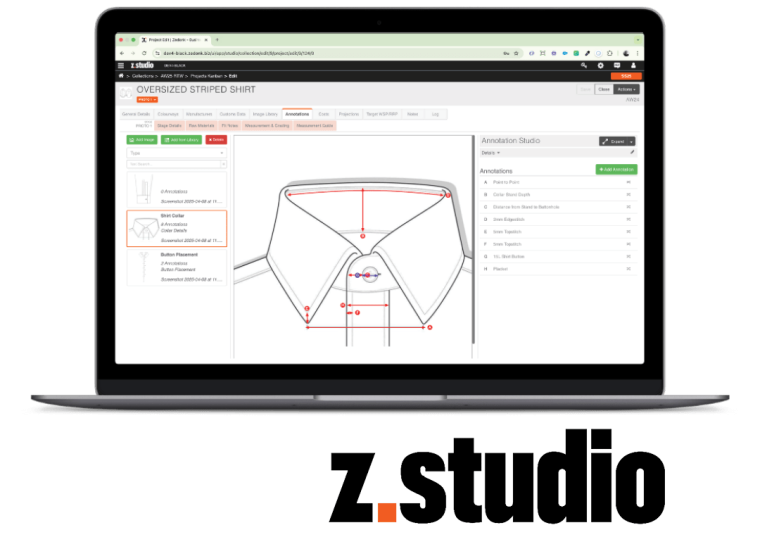 A New Sampling & Tech Pack Solution from Zedonk.