

If you’re still juggling spreadsheets, servers in your office and a patchwork of bolt‑ons, you’re probably feeling the cost of a legacy stack – inconsistent data, sluggish decision‑making, and avoidable production errors. The answer isn’t necessarily “another app”; it’s an integrated ERP tech stack combined with fashion‑specific PLM, joined up from concept to delivery. This connected approach replaces potentially weak workflows and gives you a dependable tech stack for small business growth as you scale into wholesale and international markets.
An ERP‑PLM duo centralises product data, purchasing, costings, materials, and orders in one place. Designers and merchandisers work in PLM; operations, finance and sales work in ERP and the two sync continuously. That single source is the foundation of resilient tech stack solutions.
Pro tip: with platforms like Zedonk’s fashion PLM and ERP, every collection, component, supplier and PO sits in a structured, searchable history – no more chasing emails or hunting through paper folders.

Why leading UK fashion brands modernise core systems to stay competitive globally
It’s more and more common for top UK labels to have already moved past so-called fragmented tooling. They’ve invested in an ERP tech stack that integrates directly with PLM so that teams can move faster and with confidence. For them, the commercial wins are clear:
- Speed to market: sample approvals and cost updates in PLM automatically inform purchasing and pricing in ERP.
- Accuracy: one master bill of materials (BOM) reduces risk of wrong trims, fabric mismatches, or duplicate purchase orders (POs).
- Margin protection: real‑time cost and currency visibility lets you lock margins early.
- Compliance: traceability across the product lifecycle makes audits easier and inspires retailer confidence.
This is the modern tech stack for small business owners who want enterprise‑grade control without enterprise‑grade bloat. The right tech stack solutions help you meet retailer packing and labelling requirements, automate advance shipping notices (ASNs) and electronic data interchange (EDI), and keep wholesale partners happy.
Streamline wholesale operations through one connected tech stack for small business growth
Wholesale lives and dies on timing and accuracy. An ERP tech stack integrated with PLM streamlines every step:
- Design & Development (PLM): concepts, BOMs, specs and fit notes live in one place.
- Sourcing (PLM and ERP): supplier records, lead times and minimum order quantities (MOQs) flow into demand planning and PO creation.
- Purchasing (ERP): materials and finished goods purchase orders (POs) are raised with accurate costs and dates.
- Sales (ERP): order entry, stock allocation and invoicing align with real stock positions.
- Logistics (ERP): packing lists, labels and electronic retailer documents (EDI documents) are generated without manual retyping.
For a fashion SME, this connected ERP tech stack for small businesses removes bottlenecks that often appear right as growth accelerates. It’s the difference between scaling smoothly and spiralling in admin.
Unlock visibility across the product lifecycle and supply chain with ERP‑PLM integration
The real superpower is visibility. With an integrated PLM and ERP, your team shares the same facts at the same time:
- Component‑to‑cost clarity: Your team can see how fabric, trims, labour and freight roll up from PLM into ERP, so margin figures are always up to date.
- Milestones and timelines: You can track fit approvals, bulk fabric estimated arrival dates and factory ship dates in one place, which keeps everyone aligned.
- Supplier performance: Lead‑time accuracy and quality issues become clear, comparable key metrics that help you take action sooner.
- Retailer compliance: Carton labels and markings, customs codes (HS codes) and care labels stay consistent across seasons, which reduces chargebacks and rework.
That visibility supports better relationships with manufacturers. Keeping a digital record of all your tech stacks across both systems means you can reference previous collections instantly, avoid repeating past mistakes, and maintain trust through clear, accurate documentation. For growing labels, this is exactly what a robust tech stack for a small business should deliver.

Futureproof your fashion wholesale business with scalable tech stack solutions
Today’s fashion cycles and retailer expectations will only get faster. Choosing a cloud‑based ERP tech stack that integrates tightly with PLM gives you the flexibility to add channels, regions and categories without re‑platforming. Here’s what to look for in scalable tech stack solutions:
- Fashion‑specific PLM: A fashion‑specific PLM should handle colour and size matrices, bills of materials (the list of components), measurements and fit workflows in a way that suits apparel teams.
- ERP built for apparel/wholesale: Your ERP should be designed for apparel and wholesale, with landed‑cost tracking, multi‑warehouse support, stock allocation and retailer documents sent electronically (EDI).
- Integrations, not workarounds: Integrations should be native, so accounting, ecommerce, third‑party warehouses, and wholesale portals connect without workarounds.
- Data discipline out of the box: Look for data discipline out of the box, including mandatory fields, version history and clear change logs.
- User‑first design: A user‑first design matters; if the interface is friendly and consistent, adoption sticks across the team.
Zedonk brings these elements together as a practical tech stack for small businesses – lightweight enough for a lean team, powerful enough to satisfy demanding retailers.
How Zedonk helps you migrate from legacy to leading
A successful migration is as much about people and process as software. Here’s how we approach it:
- Discovery & mapping: We start with discovery and mapping. We document your current tools, spreadsheets and manual steps, and we then blueprint the target ERP tech stack with PLM at the centre so the path forward is clear.
- Data hygiene: Next, we help you standardise colours, sizes, supplier names and product codes, which ensures information syncs cleanly across the new tech stack solutions.
- Pilot collections: We encourage the running of a limited‑scope pilot to prove the flow from design to purchase order to delivery before we roll out to the whole business.
- Training & change management: We deliver role‑based training sessions so each team can adopt their new workflows and build confidence with the system.
- Go‑live & iterate: When you go live, dashboards and key metrics highlight early wins and show clearly where to optimise next.
The outcome is a calmer, more efficient operation and a competitive tech stack for a small business that scales with you.
Joining forces – ERP, PLM, Zedonk and You
Modern fashion brands grow faster when PLM and ERP work as one. By unifying your tools into an integrated ERP tech stack, you give every team the same, up‑to‑date view of products, costs and orders – creating the kind of tech stack solutions that protect margins and speed up delivery.
If you’d like to see how this could look for your label, you can book a short demo, explore Zedonk’s PLM, Z.Studio, to understand the product development side, or see our ERP integrations to check how it connects with the systems you already use. It’s a practical tech stack for small businesses that helps fashion brands scale with confidence, without adding complexity or breaking the bank. Get in touch, we’re here to help!

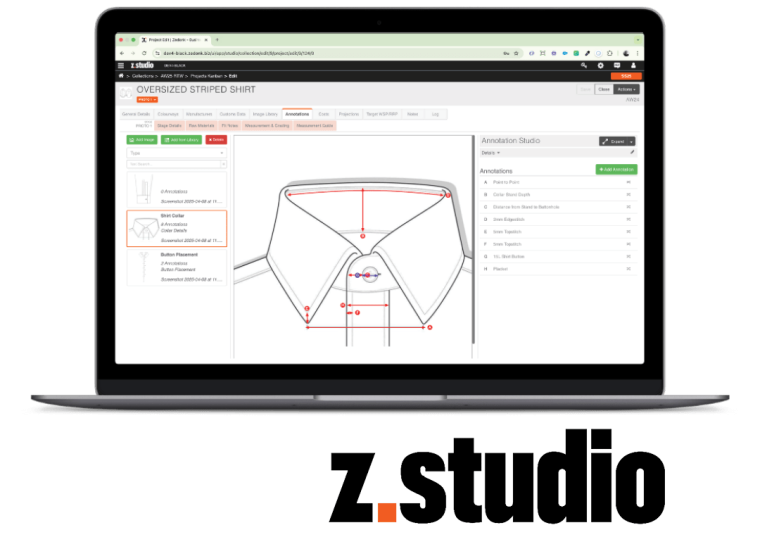 A New Sampling & Tech Pack Solution from Zedonk.